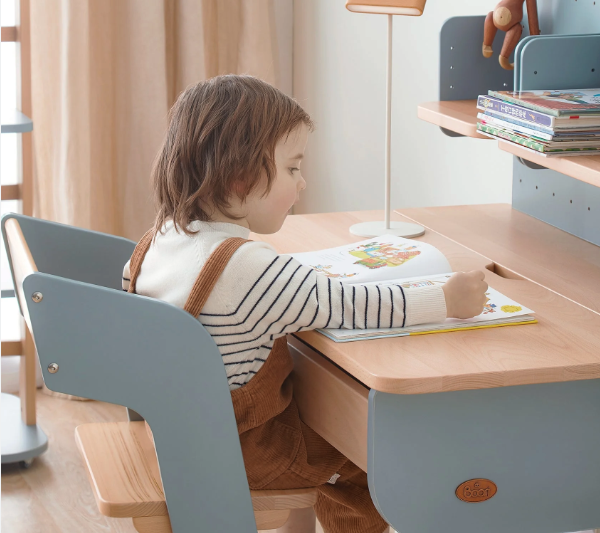
1. Introduction: Balancing Productivity and Relaxation at Home
Working and relaxing in the same home sounds simple, but it often gets mixed up. You sit down to work and get distracted, or you try to relax but your mind keeps going back to unfinished tasks. This usually happens when everything is set up in the same way, without any clear difference between work time and downtime.
It doesn’t mean you need separate rooms for everything. Most homes don’t have that kind of space anyway. What matters more is how you use the space you already have. Even small changes can help you shift between focusing and switching off.
A proper setup, even a basic one, can make it easier to get things done when needed and still enjoy your time later without feeling stuck in the same routine.
2. Creating a Dedicated Work Zone for Better Focus
One thing that really helps is having a fixed place for work. It does not have to be a full office setup. Even a simple computer table placed in the right spot can make a difference.
Try to choose a place that is a little quieter than the rest of the house. It does not have to be completely silent, just less distracting. Sitting near constant movement or noise makes it harder to stay focused, even if you don’t notice it immediately.
Lighting also plays a part. Natural light is always better if you have access to it. If not, a good desk light works fine. Straining your eyes or sitting in a dull corner can make work feel heavier than it needs to be.
Keeping the table organised helps more than people expect. When everything you need is within reach, you don’t waste time looking for things or getting up again and again. A clean surface also makes it easier to concentrate.
Over time, just sitting at that same spot starts to signal your mind that it is time to work.
3. Designing a Comfortable Entertainment Area
Once work is done, you need a place where you can step away from it, even if it is just a few feet away. This is where your entertainment setup comes in.
A good seating arrangement and a well placed TV unit design can turn a regular corner into a place where you actually enjoy spending time. The idea is to feel relaxed the moment you sit down.
The distance between the seating and the screen should feel comfortable. Too close, and it feels tiring. Too far, and you lose the experience. It does not have to be exact, just something that feels right for you.
Try to keep this area separate from your work spot, even if it is in the same room. This small difference helps your mind switch off from work mode.
You don’t need too many things here. Just comfortable seating, a clear view, and a space that feels easy to settle into.
4. Smart Layout Planning for Dual Functionality
When the same room is used for different things, layout becomes important. Without it, everything starts to overlap, and it gets hard to focus or relax properly.
It helps to divide the space, even in a simple way. Your work area on one side, your relaxation area on the other. You don’t need walls for this. Even the way furniture is placed can create that separation.
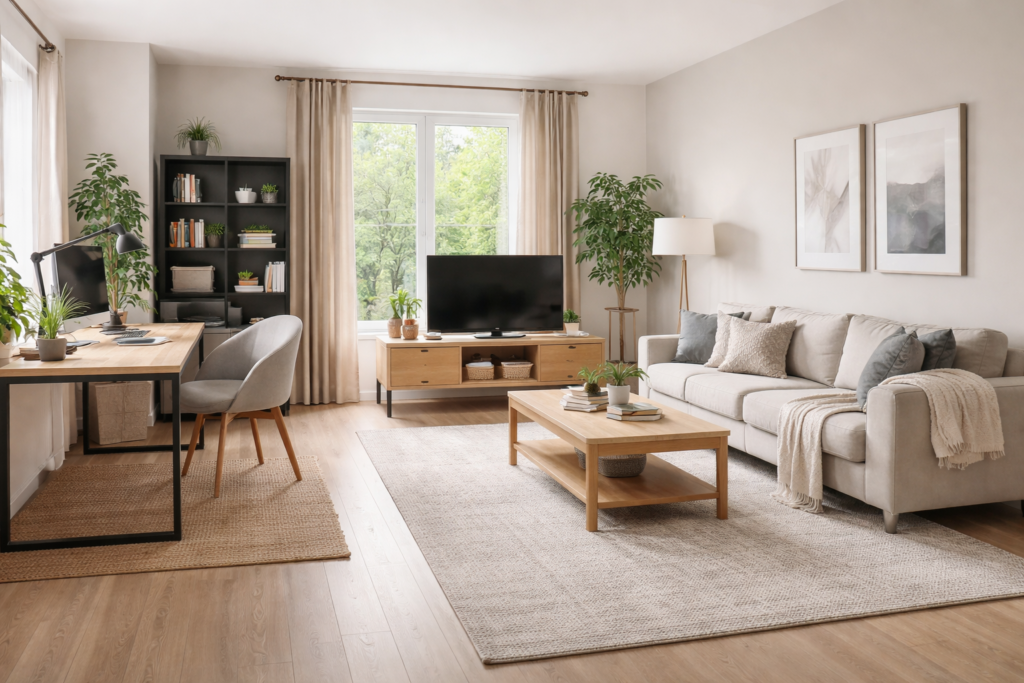
Make sure there is enough space to move around easily. If you keep bumping into things or squeezing through gaps, the room starts to feel smaller than it is.
Also, try not to mix items from both zones. Work papers on the entertainment table or remote controls on your desk can create a bit of mental clutter too.
A clear layout, even if it is basic, makes the room feel more organised and easier to use.
5. Enhancing Ambience with Lighting and Décor
Lighting can quietly change how you feel in a space. Bright light works well when you need to focus, but it may not feel as comfortable when you are trying to relax.
If possible, keep different lighting for different areas. A focused light for your computer table, and a softer one near your seating area. This makes the shift between work and rest feel more natural.
Décor should stay simple. Too many items can make the space feel busy, especially when you are trying to concentrate. A few things that you like, maybe a plant or a small piece of décor, are enough.
Try to keep the overall look calm. It helps both when you are working and when you are unwinding.
6. Conclusion: Creating a Home That Supports Work and Leisure
You don’t need a large home or separate rooms to balance work and relaxation. A few small changes in how you set things up can make a noticeable difference.
A simple computer table in the right spot can help you stay focused, while a comfortable area around your TV unit design gives you a place to switch off without carrying work into it.
It really comes down to how the space feels when you use it. If it helps you focus when needed and relax without effort later, then it is working the way it should.
Once that balance is there, the whole day starts to feel a little more manageable.